
Thaumetopea pityocampa, also known as the pine processionary caterpillar, is a particularly formidable pest with a highly effective and dangerous defense mechanism for both humans and pets.
With its thousands of orange hairs, microscopic and urticating that it releases to protect itself during every phase of stress or danger.
Once these hairs are propelled into the air or carried by the wind, they will have no difficulty clinging to the skin like a harpoon and releasing a stinging substance upon breaking on our dogs as well as on uncovered areas like hands, neck, and face. They cause allergic reactions, ocular or respiratory issues in both humans and animals.
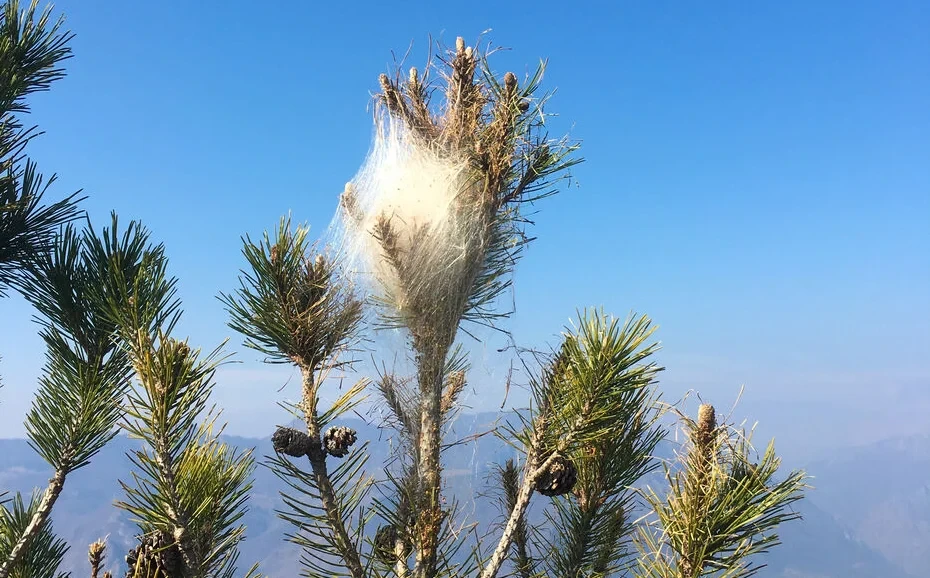
If you discover silk cocoons woven at the tops of conifers, you can be sure that the caterpillars are present!
For safety, it would be preferable to turn back!
From September to December, the processionary caterpillars form their silk cocoons and move at night to feed.
What do caterpillars love to eat?
The needles of pine trees!
They significantly weaken trees and pave the way for other parasites.
From January to May depending on the regions, they descend along the tree trunks, in single file, one behind the other, a true procession!
It is during this period that the risk is highest for our dogs, as they are constantly tracking, with their noses to the ground, and if by misfortune they encounter processionary caterpillars, the consequences can be very serious and irreversible!
The effects of the caterpillars on our dogs should be taken very seriously and generally lead to veterinary emergencies.
The urticating hairs cause necrosis on the tongue as well as on the mucous membranes and require an emergency consultation.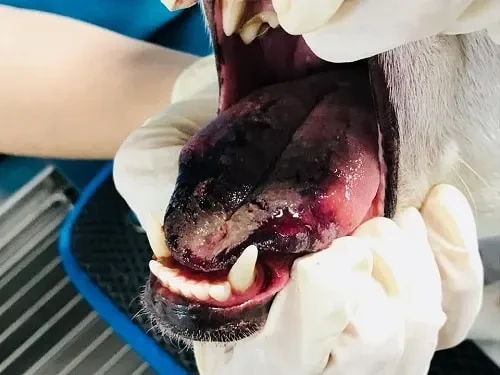
Other symptoms of envenomation:
The urticating hairs can come into contact with your dog's eyes and cause conjunctivitis or corneal ulcers.
The lesions are aggravated by the dog's reflex to lick and scratch, which causes skin lesions particularly around the lips and in areas with thin skin.
Shortly after coming into contact with the caterpillars' venom, significant inflammation appears, and the dog begins to salivate excessively and suffers from itching.
The infected areas thus necrotized blacken and then detach from the healthy parts in just a few days irreversibly!
If your dog is affected, you must react quickly, taking him to the veterinarian as soon as possible so that he can administer all necessary care for recovery.
The quicker you react, the better chance your dog has to recover.


