
All dogs need activities to feel good in their minds and paws. - But what are they? - What should we do to make them happy and fulfilled?
Why is that?
- Because we do not allow them to adequately and frequently satisfy their need for activities (physical and mental energy expenditure).
Our dogs are genetically and instinctively programmed to "do"; they need action! Did you know that inactivity leads to behavioral problems and psychosomatic disorders?
Dogs are often chosen for their physical and aesthetic criteria, but the specific needs related to each breed are not always taken into account.
To do it right, when adopting, you must be aware of your future dog's needs and be able to meet them to make him happy.
General activity consists of:
- securing activity
- feeding activity
- hunting activity
- sexual activity
- social activity
- aggressive activity
- locomotor activity
- vocal activity
- chewing activity
- play activity
- intellectual activity
You must remember that intellectual activity is ten times more tiring than locomotor activity, and even more tiring than vocal activity.
For his well-being and to avoid developing behavioral issues, anxiety, or stress, your dog needs daily and throughout his life:
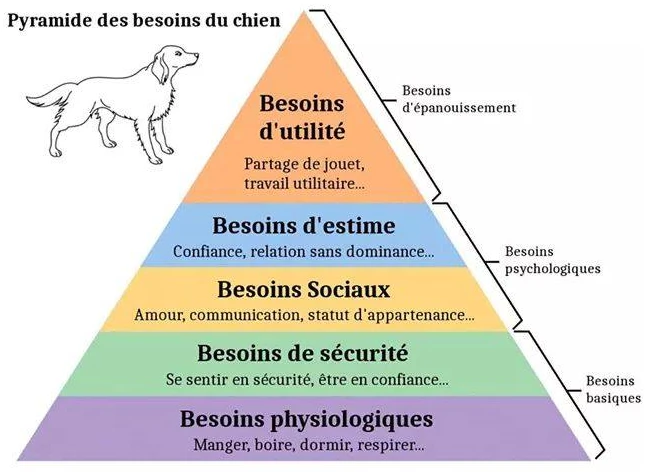
- Survival and security activity: activities aimed at meeting his needs are a priority, meaning that if the dog is scared, hungry, in pain, or cold (.....) it’s pointless to try to play with him because he will not be receptive to your requests. His priorities will be elsewhere; he will be in emergency mode.
Your dog, like any individual, needs nutritional intake, fresh water, and a secure place where he can shelter from the elements and rest.
- Feeding activity: this encompasses all activities necessary for feeding, from foraging for food to consumption. In the wild, wild dogs spend about 5 hours finding and obtaining food.
Genetically and instinctively, the family dog is programmed like the wild dog; he needs to engage for 5 hours daily.
So why not make your dog work for his food (intelligence games, educational toys, pipolino....) so that he earns his meals?
- Hunting activity: a dog must hunt; it’s in his nature and he needs it. In hunting activity, there are several sequences such as observation: it can be visual, auditory, or olfactory!
Hunting and pursuit: dogs love to stalk, approach, and chase moving prey.
To satisfy this need, you can use a frisbee: chasing and catching it mid-air is a hunting behavior, which is always better than chasing a jogger or a cyclist!
Sniffing and tracking in a new location is much more beneficial and tiring for him (it stimulates his senses and instincts) than a physical energy expenditure like an hour of jogging.
- Sexual activity: females need sexual activity during their heat period; on the other hand, males are always ready!
For safety, keep your female on a leash during her heat period as she may run away to satisfy her sexual needs.
- Social activity: yes, dogs need to see their peers, be around humans and other species; dogs do not like and are not capable of living alone.
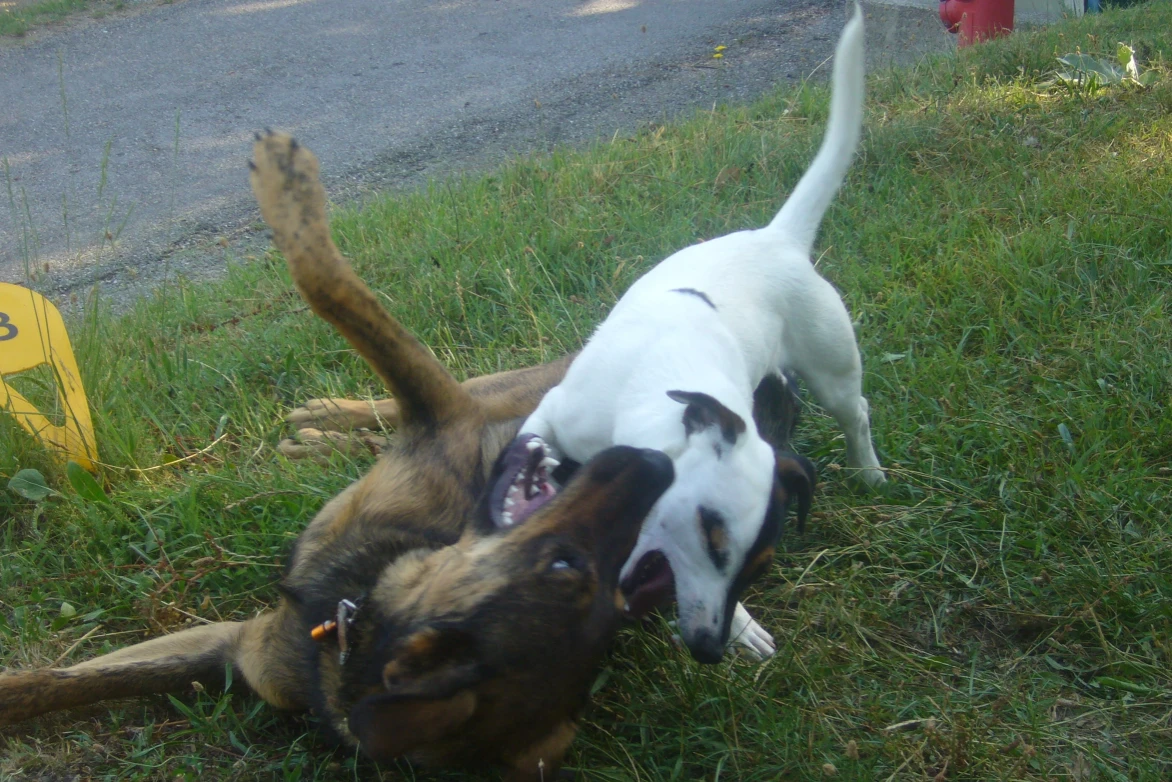
Most family dogs have to settle for social interactions only with their humans; even if they enjoy our company and our presence reassures them, they need to interact with their peers, do dog things, communicate, play, and engage in friendly tussles....
For their well-being, don’t hesitate to organize dog walks or visit dog parks.
- Aggressive activity: aggression is part of a dog's activities; it’s also a means of communication! A dog will very rarely go as far as to bite, but if he does, it will be to calm himself or to protect himself.
If your dog feels the need, you can practice protection sports to satisfy him while providing a framework.
- Locomotor activity: your dog needs daily walks, but you must diversify his outings; I’m not talking about hygienic walks of 10 minutes but real outings!
Go for walks in the forest, in the fields, even in the city; try to take your companion to various places!
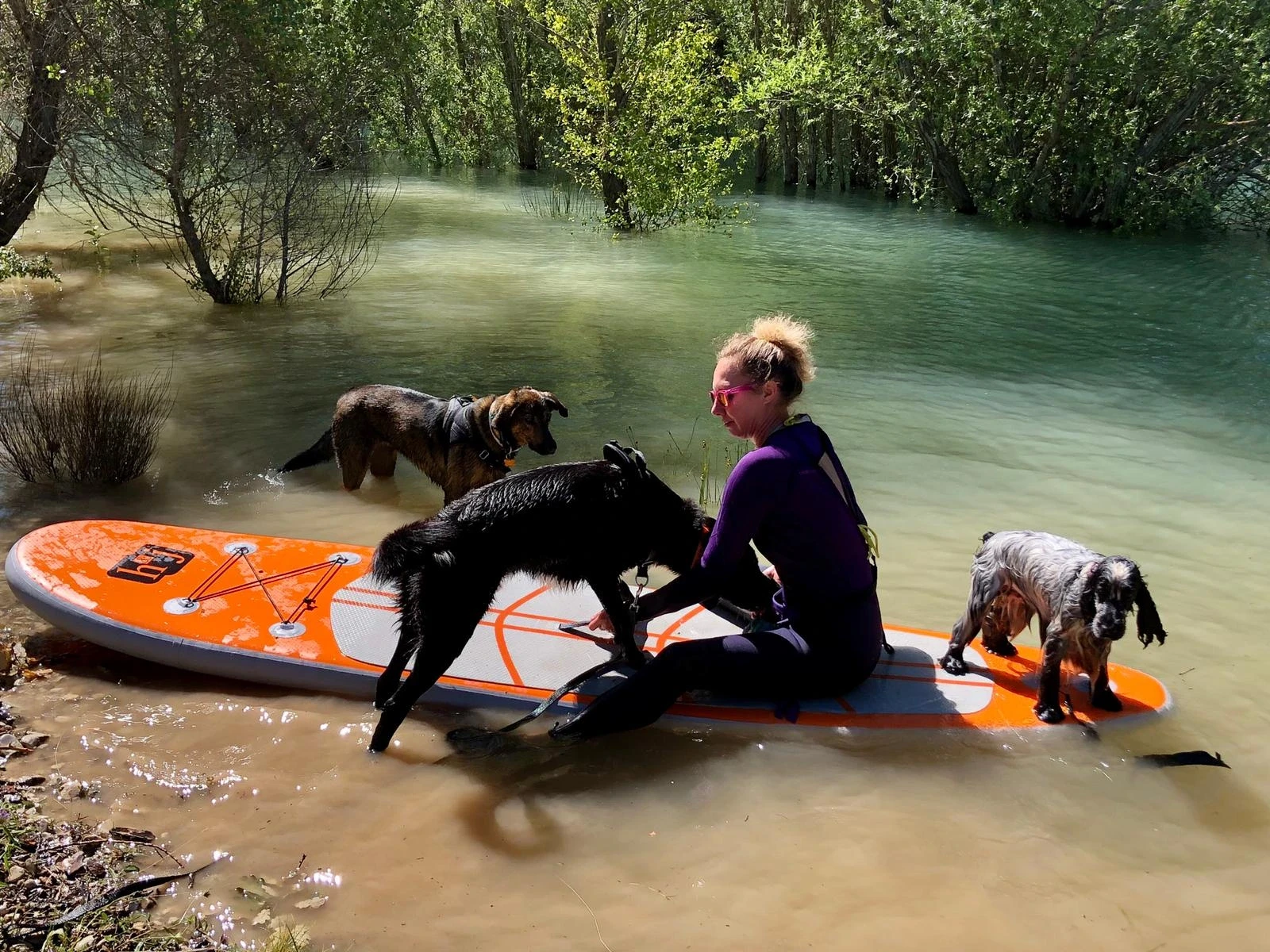
Some walks can be done in silence, others with peers or with a frisbee; don’t hesitate to have him practice some simple commands like sit or down so you can greatly praise him when he succeeds! Engage in a sport together like jogging, biking, or hiking; they love to share activities with us, and the bond we share is only strengthened!
- Vocal activity: this activity is a form of alert, boredom, or discomfort. Some dogs are very afraid of being alone, and howling is a cry for help!
You also have dogs that bark at passersby in their yard; this is a form of boredom, it’s the only way they have found to occupy themselves, they pass the time barking and alerting.
- Chewing activity: chewing is an instinctive and biological need for your dog, even more so for puppies! Depending on the breed, the chewing need can last up to an hour a day.
To meet this need, several solutions are available to you:
- Go to your butcher and ask for raw bones.
- Buy beef ears with hair.
- Get rubber balls that you can stuff as you wish.
- Prepare an occupation ice cube with cheese, ham.....
- Intellectual activity: this activity will allow your dog to work and think; he will be happier to feel useful.
You can teach him new tricks, buy him intelligence and occupation toys, teach him to solve a problem to access his treat, practice tracking in your garden......
The dog loves to please you and feel useful! Remember, to have a happy dog, we must meet the needs of his species.
If you have difficulties with your four-legged companion, do not hesitate to call on a professional dog trainer who works with respect and kindness.